Personalized Breast Implant Surgery for Natural Shape, Proportion, and Balance
Breast augmentation is one of the most individualized procedures in plastic surgery.
Some women want a subtle increase in volume that looks as though it could naturally belong to their body. Others prefer more upper-pole fullness, projection, or a more noticeable change.
The right result is not determined by implant size alone.
Breast shape, chest width, existing breast tissue, skin elasticity, nipple position, breast asymmetry, implant dimensions, and the relationship between the breasts and the rest of the body all influence the final appearance.
Dr. Baotram Tran approaches breast augmentation by selecting an implant and surgical technique that complement each patient's anatomy and aesthetic goals.
The objective is not simply to make the breasts larger.
It is to create the size, shape, and proportion that look right for your body.
What Is Breast Augmentation?
Breast augmentation is surgery performed to increase breast volume and modify breast shape using breast implants or, in selected patients, fat transfer.
Patients may consider breast augmentation to:
- Increase breast size
- Restore volume lost after pregnancy or breastfeeding
- Restore volume after weight loss
- Improve breast shape
- Increase upper-pole fullness
- Improve breast symmetry
- Create greater projection
- Improve overall body proportions
Breast augmentation does not automatically correct significant breast sagging.
When the nipple or breast tissue has descended significantly, Breast Lift or Breast Lift with Implants may provide a better result.
Breast Augmentation Is About More Than Cup Size
Bra cup size is not a precise way to select a breast implant.
The same implant can look completely different on two women because their anatomy is different.
Factors that influence the final result include:
- Chest width
- Breast width
- Existing breast volume
- Breast shape
- Skin elasticity
- Rib cage anatomy
- Nipple position
- Breast asymmetry
- Implant width
- Implant projection
- Implant volume
- Implant placement
- Surgical technique
For this reason, Dr. Tran does not select implants based on a desired cup size alone.
Implant selection begins with your anatomy and the look you want to achieve.
Choosing the Right Breast Implant
Size Is Only One Part of Implant Selection
Patients frequently arrive at consultation focused on implant volume—for example, 300 cc, 350 cc, or 400 cc.
Volume matters, but it does not tell the whole story.
Two implants with the same volume may have different:
- Widths
- Projections
- Profiles
- Shapes
An implant that is too wide may extend excessively toward the sides of the chest.
An implant that is too narrow may provide excessive projection or fail to appropriately fill the breast envelope.
The goal is to choose an implant whose dimensions work with your breast and chest anatomy while creating the appearance you want.
Implant Profile and Projection
Breast implants are available in different profiles.
Profile describes the relationship between an implant's width and how far it projects forward from the chest.
Depending on the implant system, options may range from lower to higher profiles.
A higher-profile implant is not automatically better, nor does it necessarily create a more attractive result.
The appropriate profile depends on:
- Breast width
- Chest dimensions
- Desired projection
- Existing breast tissue
- Desired upper-pole fullness
- Overall body proportions
The implant should fit the breast—not force the breast to fit the implant.
Silicone vs. Saline Breast Implants
Both silicone gel and saline breast implants are FDA-approved options for breast augmentation.
Each has advantages and limitations.
Silicone Breast Implants
Silicone implants are filled with cohesive silicone gel.
Many patients prefer silicone implants because they can provide a soft, natural feel, particularly in patients with relatively little breast tissue covering the implant.
Silicone implants are available in a wide variety of dimensions and profiles.
Because silicone implant rupture may occur without obvious symptoms, ongoing implant surveillance is important.
Saline Breast Implants
Saline implants have a silicone outer shell that is filled with sterile saline solution.
One advantage of saline implants is that rupture is generally easier to recognize because the implant deflates as the saline is absorbed by the body.
However, saline implants may feel firmer or demonstrate more visible rippling in some patients, particularly when there is limited natural tissue coverage.
The appropriate implant depends on your anatomy, preferences, and priorities.
Smooth vs. Textured Breast Implants
Implant surface is an important part of breast implant safety discussions.
For cosmetic breast augmentation, Dr. Tran uses smooth breast implants.
BIA-ALCL, a rare lymphoma associated with breast implants, occurs more frequently in patients with textured implants than in patients with smooth-surface implants.
Your consultation will include discussion of the implant being recommended and its specific characteristics.
Where Is the Breast Implant Placed?
Breast implants can be positioned in different tissue planes depending on the patient's anatomy.
There is no single implant position that is ideal for every patient.
Under the Muscle / Dual-Plane Breast Augmentation
In a subpectoral or dual-plane augmentation, at least part of the implant is positioned beneath the pectoralis major muscle.
This can provide additional soft-tissue coverage over the upper portion of the implant, which may be particularly useful in thinner patients.
Potential advantages may include:
- Greater upper implant coverage
- Less visible implant edges in selected patients
- Reduced visible rippling in patients with limited breast tissue
Potential considerations include:
- More discomfort during early recovery
- Movement of the implant with contraction of the pectoralis muscle, known as animation deformity
- The need to carefully control the implant pocket
Over-the-Muscle Breast Augmentation
In selected patients with adequate natural breast tissue, the implant may be placed above the pectoralis muscle.
Depending on the surgical plan, the implant may be positioned in a subglandular or subfascial plane.
Potential advantages may include:
- Avoidance of pectoralis animation deformity
- Less disruption of the chest muscle
- Potentially easier early recovery in selected patients
However, adequate soft-tissue coverage is important.
Patients with thin breast tissue may have greater risk of visible implant edges or rippling when an implant is positioned above the muscle.
Implant position should be selected according to tissue thickness, breast anatomy, implant characteristics, lifestyle, and desired result.
What Is Dual-Plane Breast Augmentation?
Dual-plane breast augmentation combines characteristics of submuscular and subglandular implant placement.
The upper portion of the implant is covered by the pectoralis muscle while the relationship between the lower breast tissue and muscle is modified according to the patient's anatomy.
This technique can be useful when additional upper-pole implant coverage is desirable while allowing the lower breast to accommodate the implant appropriately.
Not every patient needs a dual-plane augmentation.
The surgical plane is selected based on the individual breast.
Breast Implant Incision Options
Several incision locations can be used for breast augmentation.
The appropriate incision depends on the implant, anatomy, surgical technique, previous scars, and patient preference.
Inframammary Incision
An inframammary incision is placed within or near the natural fold beneath the breast.
This approach provides direct visualization of the implant pocket and precise control of implant placement.
The resulting scar is positioned beneath the breast.
Periareolar Incision
A periareolar incision is positioned along part of the border between the areola and surrounding breast skin.
This can camouflage the scar at the natural color transition of the areola in appropriately selected patients.
Not every patient is a candidate, and the size of the areola and implant influence whether this approach is appropriate.
Transaxillary Breast Augmentation
Breast Augmentation Through the Armpit
For selected patients, breast implants can be placed through an incision hidden within the natural crease of the armpit.
This is known as transaxillary breast augmentation.
The primary advantage is that there is no surgical incision placed directly on the breast.
Through the axillary incision, the implant pocket is carefully created and the implant is positioned within the breast.
Transaxillary augmentation can be particularly appealing to patients who strongly prefer to avoid a scar on the breast itself.
However, it is not the ideal approach for every patient.
The appropriate incision should be selected based on anatomy, implant choice, previous surgery, desired implant position, and the degree of surgical control required.
The best incision is not simply the least visible incision—it is the incision that allows the operation to be performed safely and precisely while meeting the patient's priorities.
Can Breast Augmentation Correct Asymmetry?
Almost all breasts are naturally asymmetric.
Differences may involve:
- Breast volume
- Breast width
- Nipple position
- Inframammary fold height
- Breast shape
- Chest wall anatomy
- Degree of breast sagging
Breast augmentation can often improve asymmetry, but it cannot guarantee perfectly identical breasts.
Different implant sizes or dimensions may occasionally be used when appropriate.
However, implant selection alone cannot correct every type of asymmetry.
Some differences arise from the chest wall, nipple position, breast fold, or skin envelope and may remain after surgery.
The goal is improved balance—not mathematical symmetry.
Breast Augmentation After Pregnancy
Pregnancy and breastfeeding can change breast volume, skin elasticity, nipple position, and overall breast shape.
Some women primarily lose volume and remain good candidates for breast augmentation alone.
Others develop both volume loss and breast descent.
When the nipple and breast tissue have dropped significantly, simply placing a larger implant may not adequately correct the shape and can sometimes create an overly heavy or unnatural breast.
These patients may benefit from Breast Lift with Implants.
The correct operation depends on whether the primary issue is:
Volume loss, tissue descent, or both.
Breast Augmentation After Weight Loss
Weight loss can reduce breast volume and alter the skin envelope.
Patients with relatively good skin elasticity and limited sagging may be candidates for augmentation alone.
Patients with significant loose skin or breast descent may require a Breast Lift with or without implants.
Breast Augmentation vs. Breast Lift
Breast augmentation and breast lift address different problems.
Breast Augmentation
Primarily increases volume and modifies breast shape.
Breast Lift
Repositions and reshapes breast tissue, removes excess skin, and raises the nipple when appropriate.
An implant can provide some filling of a mildly deflated breast, but an implant is not a substitute for a breast lift when significant ptosis is present.
Patients who need both additional volume and lifting may benefit from Breast Lift with Implants.
Breast Augmentation with Fat Transfer
Breast augmentation does not always require an implant.
Selected patients may be candidates for Fat Transfer to the Breast.
Fat is removed from another area of the body using liposuction, processed, and carefully transferred to the breasts.
Fat transfer may be attractive for patients who:
- Want a relatively modest increase in breast volume
- Prefer to avoid breast implants
- Have adequate donor fat
- Want subtle improvement in breast contour or asymmetry
Fat transfer has limitations.
Not all transferred fat survives permanently, and the degree of enlargement is generally more limited than with implants.
For patients seeking a larger or more predictable increase in volume, implants may be more appropriate.
Breast Augmentation with Fat Grafting and Implants
In selected patients, breast implants and fat grafting can be used together.
The implant provides the primary increase in breast volume, while fat may be strategically placed to improve:
- Implant edge coverage
- Cleavage transition
- Selected contour irregularities
- Breast asymmetry
- Soft-tissue thickness
This combination is sometimes referred to as hybrid breast augmentation.
It is not necessary for every patient.
Will Breast Implants Look Natural?
“Natural” means different things to different patients.
Some patients want:
- A subtle slope from the upper chest
- Moderate projection
- Minimal upper-pole fullness
Others prefer:
- More visible cleavage
- Greater projection
- A rounder upper breast
- More pronounced upper-pole fullness
Neither preference is inherently correct.
The important part is communicating what you consider attractive.
Dr. Tran uses your anatomy, implant dimensions, tissue characteristics, photographs, and aesthetic preferences to create an individualized surgical plan.
A successful breast augmentation should reflect your goals—not someone else's definition of the ideal breast.
How Much Cleavage Can Breast Augmentation Create?
Cleavage is influenced heavily by natural anatomy.
Factors include:
- Distance between the breasts
- Chest width
- Breastbone anatomy
- Existing breast tissue
- Implant width
- Implant pocket
- Nipple position
An implant can improve breast fullness, but it cannot safely override every anatomical limitation.
Trying to force implants excessively toward the center of the chest can create problems with implant position.
The goal is to improve cleavage within the limits of your anatomy.
Will Breast Implants Fix Tubular or Constricted Breasts?
Patients with constricted or tuberous breast anatomy may require more than routine implant placement.
These breasts may have:
- A narrow breast base
- Tight lower-pole tissue
- Elevated breast folds
- Enlarged or protruding areolae
- Uneven breast development
- Significant asymmetry
Treatment may require modification of the constricted breast tissue, adjustment of the breast fold, implant placement, fat grafting, or a breast lift depending on the anatomy.
Breast shape must be addressed—not simply breast size.
Your Breast Augmentation Consultation
During your consultation, Dr. Baotram Tran will evaluate:
- Breast width
- Chest dimensions
- Existing breast volume
- Skin thickness
- Skin elasticity
- Breast asymmetry
- Nipple position
- Inframammary fold position
- Degree of breast ptosis
- Chest wall anatomy
- Previous breast surgery
- Your desired breast size
- Desired projection
- Desired upper-pole fullness
- Your lifestyle and physical activity
You will have an opportunity to discuss implant sizes and dimensions and try implant sizers to better understand different volume options.
Your surgical plan will also address:
- Silicone versus saline
- Implant size
- Implant profile
- Implant dimensions
- Implant placement
- Incision location
- Whether a breast lift is needed
- Whether fat grafting may be beneficial
The consultation is not simply about choosing an implant. It is about designing the breast you want within the limits of your anatomy.
The Breast Augmentation Procedure
Breast augmentation is generally performed as an outpatient procedure under anesthesia.
The planned incision is created and a precise implant pocket is developed according to the surgical plan.
The implant is then positioned either above or partially beneath the pectoralis muscle depending on the selected technique.
Attention is given to:
- Implant position
- Breast fold position
- Implant symmetry
- Pocket dimensions
- Nipple-to-breast relationship
- Existing breast asymmetry
- Overall breast shape
The incisions are carefully closed and a supportive postoperative bra may be applied.
Breast Augmentation Before & After Photos
Before-and-after photographs are particularly useful when considering breast augmentation because implant volume alone does not predict appearance.
When reviewing results, look for patients with anatomy similar to yours, including:
- Chest width
- Starting breast size
- Breast shape
- Skin quality
- Nipple position
- Degree of asymmetry
Also consider whether you prefer a subtle result or more visible upper-pole fullness and projection.
View Breast Augmentation Before & After Photos
Recovery After Breast Augmentation
The First Few Days
Tightness, pressure, swelling, and discomfort are expected during early recovery.
Patients with implants placed partially beneath the muscle may experience greater muscle tightness initially.
Light walking is encouraged.
The First One to Two Weeks
Most patients progressively return to routine non-strenuous activities.
The breasts often appear:
- High
- Firm
- Swollen
- More prominent in the upper pole
This is normal during early healing.
The implants gradually settle as swelling decreases and the tissues relax.
Four to Six Weeks
Most patients progressively resume exercise according to their healing and postoperative instructions.
Activities involving substantial chest-muscle contraction may require additional consideration in patients with submuscular implants.
Several Months
The breasts continue to soften and settle.
Scars mature and the final breast shape becomes increasingly apparent.
Your breasts immediately after surgery are not your final result.
Breast Implants Are Not Lifetime Devices
Breast implants are not considered lifetime devices.
This does not mean that every implant must be replaced after a predetermined number of years.
There is no rule that breast implants must automatically be replaced every 10 years.
However, the longer implants are in place, the greater the likelihood that a patient may eventually require another breast operation.
Future surgery may be necessary because of:
- Implant rupture
- Capsular contracture
- Implant malposition
- Changes in breast tissue
- Pregnancy
- Weight changes
- Aging
- Patient preference
- Desire for a different implant size
- Desire for implant removal
Patients considering augmentation should understand that breast implants require long-term follow-up.
Monitoring Silicone Breast Implants
Silicone implant rupture can sometimes occur without obvious symptoms.
This is known as a silent rupture.
For this reason, ongoing surveillance of silicone implants is recommended.
MRI is highly effective for detecting silent silicone implant rupture, and ultrasound is also an accepted screening option.
Your recommended imaging schedule will be reviewed with you and should follow current FDA and implant-manufacturer recommendations.
Routine breast cancer screening should also continue according to age, personal risk factors, and recommendations from your healthcare providers.
Breast Implant Safety
Breast implants are among the most studied medical devices used in aesthetic surgery, but they are not risk-free.
Patients considering augmentation should understand both common surgical complications and less common implant-associated conditions.
Capsular Contracture
Every breast implant naturally develops a layer of scar tissue around it called a capsule.
In most patients, the capsule remains soft and does not cause a problem.
Capsular contracture occurs when this scar tissue becomes abnormally tight around the implant.
It may cause:
- Breast firmness
- Change in breast shape
- Implant displacement
- Discomfort or pain
More significant capsular contracture may require additional surgery.
Breast Implant Rupture
Both saline and silicone implants can rupture.
Saline Implant Rupture
The saline is absorbed by the body and the breast typically becomes visibly smaller.
Silicone Implant Rupture
Silicone rupture may be silent and may not cause an obvious change in breast appearance.
Imaging may therefore be necessary to identify it.
A ruptured implant may require removal or replacement depending on the circumstances.
Breast Implant-Associated Anaplastic Large Cell Lymphoma
Breast implant-associated anaplastic large cell lymphoma (BIA-ALCL) is a rare lymphoma that can develop in the capsule or fluid surrounding a breast implant.
It is not breast cancer.
BIA-ALCL has occurred predominantly in patients with textured-surface implants.
Symptoms may include persistent swelling, fluid accumulation, a breast mass, pain, or changes around an implant, particularly years after surgery.
Any new or unexplained change around a breast implant should be evaluated.
Breast Implant Illness
Some patients with breast implants report systemic symptoms collectively referred to as breast implant illness (BII).
Reported symptoms can include:
- Fatigue
- Joint or muscle pain
- Difficulty concentrating or “brain fog”
- Rashes
- Hair changes
- Other systemic symptoms
Breast implant illness is not currently a single formally defined medical diagnosis, and the relationship between implants and these symptoms remains incompletely understood.
Some patients report improvement after implant removal, while others may not.
Patients should feel comfortable discussing these concerns openly when considering breast implants.
Breast Implants and Mammograms
Women with breast implants still require appropriate breast cancer screening.
When scheduling a mammogram, tell the imaging facility that you have breast implants.
Additional mammographic views may be used to visualize breast tissue around the implants.
Breast implants do not eliminate the need for routine breast screening.
Breastfeeding After Breast Augmentation
Many women are able to breastfeed after breast augmentation, but breastfeeding cannot be guaranteed.
The ability to breastfeed depends on many factors, including:
- Pre-existing breast anatomy
- Milk-producing tissue
- Previous pregnancies
- Surgical technique
- Incision location
- Individual physiology
If future breastfeeding is important to you, discuss this during consultation.
Pregnancy After Breast Augmentation
Breast implants do not prevent future pregnancy.
However, pregnancy and breastfeeding can change the breast tissue surrounding the implant.
After pregnancy, the breasts may become:
- Larger or smaller
- More lax
- Deflated
- More asymmetric
- Lower on the chest
Some patients remain happy with their augmentation after pregnancy.
Others eventually choose a Breast Lift, implant exchange, or Breast Lift with Implants to address subsequent changes.
Breast Augmentation Investment
Estimated Investment: $7,000–$9,000
The investment for breast augmentation varies depending on the surgical approach, implant selection, anesthesia, and the complexity of the procedure.
Your investment may vary based on:
- Type of breast implant selected
- Implant size and profile
- Surgical approach
- Implant pocket placement
- Degree of existing breast asymmetry
- Previous breast surgery
- Anesthesia requirements
- Operating room or facility fees
- Whether breast augmentation is combined with another procedure
Dr. Tran offers different breast augmentation approaches based on each patient's anatomy and goals, including the transaxillary approach, which places the incision within the underarm rather than on the breast in appropriately selected patients.
Patients who also have significant breast sagging may require a Breast Lift with Implants [LINK] rather than breast augmentation alone.
Following your consultation with Dr. Baotram Tran, you will receive an individualized surgical plan and detailed quote.
What Is Included in the Breast Augmentation Investment?
Your surgical quote will outline the fees associated with your procedure, which may include:
- Surgeon’s fee
- Breast implants
- Anesthesia
- Operating room or facility fees
- Routine postoperative visits
- Postoperative surgical garments when applicable
Because every surgical plan is individualized, the final investment is determined after your consultation.
Breast Augmentation Myths and Misconceptions
Myth: Breast Implants Have to Be Replaced Every 10 Years
No.
Breast implants are not lifetime devices, but there is no universal rule requiring automatic replacement at 10 years.
Implants are replaced or removed when there is a medical or aesthetic reason to do so.
Myth: A Bigger Implant Will Give Me Better Cleavage
Not necessarily.
Cleavage depends heavily on natural breast and chest anatomy.
Implant width and position can influence cleavage, but implants should not be forced into an anatomically inappropriate position.
Myth: Breast Implants Automatically Lift Sagging Breasts
No.
An implant adds volume.
It does not reliably correct significant breast ptosis.
Patients with meaningful breast descent may need a Breast Lift with Implants.
Myth: Everyone Should Have Implants Under the Muscle
No.
Submuscular, dual-plane, subfascial, and selected subglandular approaches each have potential advantages and limitations.
Implant position should be individualized.
Myth: Higher-Profile Implants Always Look More Artificial
No.
Profile describes implant dimensions, not whether the result will look natural.
A higher-profile implant may look very natural on a patient whose anatomy is well suited to it.
Myth: Silicone Implants Are Dangerous Because Silicone Can Cause Autoimmune Disease
Current evidence has not established that silicone breast implants cause connective-tissue disease.
However, some patients with breast implants report systemic symptoms commonly referred to as breast implant illness, and this remains an area of ongoing research.
Myth: Breast Augmentation Makes Both Breasts Perfectly Symmetrical
No.
Natural breasts and chest walls are asymmetric.
Surgery can often improve asymmetry but cannot create perfectly identical breasts.
Myth: Breast Implants Prevent Mammograms
No.
Women with implants can and should continue appropriate breast cancer screening.
The imaging facility should be informed that breast implants are present.
Myth: Breast Implants Last Forever
No.
Breast implants are not lifetime devices and future surgery may eventually be necessary.
Myth: The Largest Implant My Skin Can Hold Is the Best Choice
No.
Oversizing an implant can place greater stress on breast tissue and skin and may contribute to an unnatural appearance or future tissue changes.
Implant dimensions should be appropriate for the breast envelope and chest.
Frequently Asked Questions About Breast Augmentation
What Is Breast Augmentation?
Breast augmentation is surgery performed to increase breast volume and modify breast shape using implants or, in selected patients, fat transfer.
How Do I Choose My Breast Implant Size?
Implant selection is based on breast width, chest dimensions, existing tissue, skin characteristics, desired projection, and your aesthetic goals.
Implant sizers can help you visualize different volumes during consultation.
Should I Choose Silicone or Saline Implants?
Both are options.
Silicone implants are commonly selected for their feel and range of dimensions, while saline implants offer different characteristics, including easier recognition of rupture.
The appropriate choice depends on your preferences and anatomy.
Should My Implant Go Above or Below the Muscle?
Neither position is universally better.
Patients with limited breast tissue may benefit from additional implant coverage beneath the muscle, while selected patients with adequate tissue may be good candidates for an above-muscle approach.
What Is Dual-Plane Breast Augmentation?
Dual-plane augmentation positions the upper portion of the implant beneath the pectoralis muscle while modifying the relationship between the muscle and lower breast tissue.
It can provide additional upper implant coverage while allowing appropriate expansion of the lower breast.
Can Breast Implants Be Placed Through the Armpit?
Yes.
Selected patients may be candidates for transaxillary breast augmentation, which places the incision within the armpit rather than directly on the breast.
Will I Have a Scar on My Breast?
That depends on the incision selected.
Inframammary and periareolar approaches create scars on or immediately adjacent to the breast.
Transaxillary augmentation places the scar within the armpit.
All surgical incisions create permanent scars, although they generally become less noticeable as they mature.
Can Breast Augmentation Fix Uneven Breasts?
It can often improve volume asymmetry.
However, differences involving nipple position, chest wall anatomy, breast folds, or breast shape may remain.
Do I Need a Breast Lift Instead?
If your primary problem is significant breast sagging rather than loss of volume, a Breast Lift may be more appropriate.
If you want both lifting and additional volume, Breast Lift with Implants may be recommended.
Can I Have Breast Augmentation Without Implants?
Selected patients can increase breast volume using Fat Transfer to the Breast.
The achievable increase is generally more limited than with implants.
How Long Does Breast Augmentation Surgery Take?
Procedure time varies according to implant placement, incision, anatomy, and whether additional procedures are performed.
How Painful Is Breast Augmentation?
Patients typically experience tightness, pressure, soreness, and swelling during early recovery.
Discomfort generally improves progressively over the first several days.
When Can I Return to Work?
Many patients return to non-strenuous work within several days to approximately one week, depending on the type of work, implant position, and individual recovery.
When Can I Exercise?
Light walking begins early.
More strenuous exercise and upper-body activity are resumed gradually according to healing and postoperative instructions.
When Will My Implants Drop and Settle?
The breasts commonly appear high and firm immediately after surgery.
Implants gradually settle and the tissues soften over the following weeks to months.
Do Breast Implants Need to Be Replaced Every 10 Years?
No.
There is no mandatory 10-year replacement schedule.
However, implants are not lifetime devices and the likelihood of requiring additional surgery increases over time.
How Are Silicone Implants Monitored for Rupture?
Silicone implant rupture may be silent.
MRI and ultrasound can be used to screen for rupture, and ongoing surveillance should follow current FDA and implant-manufacturer recommendations.
Can I Still Get Mammograms?
Yes.
Tell the mammography facility that you have breast implants so appropriate imaging techniques can be used.
Can I Breastfeed After Breast Augmentation?
Many women can, but breastfeeding cannot be guaranteed.
If future breastfeeding is important to you, discuss this before surgery.
What Happens to Breast Implants During Pregnancy?
The implant itself may remain unchanged, but pregnancy can substantially alter the breast tissue and skin surrounding it.
Some women later choose additional breast surgery to address these changes.
Can Breast Implants Cause BIA-ALCL?
BIA-ALCL is a rare lymphoma associated with breast implants and has occurred more frequently in patients with textured-surface implants.
Any persistent swelling, mass, fluid collection, or unexplained change around an implant should be evaluated.
What Is Breast Implant Illness?
Breast implant illness is a term used by some patients to describe systemic symptoms such as fatigue, brain fog, joint pain, muscle pain, and other symptoms experienced in association with breast implants.
Its causes remain incompletely understood.
What Are the Risks of Breast Augmentation?
Potential risks include:
- Bleeding
- Hematoma
- Infection
- Seroma
- Delayed wound healing
- Unfavorable scarring
- Changes in nipple or breast sensation
- Breast asymmetry
- Implant malposition
- Implant displacement
- Rippling or implant visibility
- Capsular contracture
- Implant rupture or deflation
- Animation deformity
- Breast tissue changes over time
- Need for implant removal or replacement
- Need for revision surgery
- Anesthesia-related complications
Breast implants also carry specific long-term considerations, including BIA-ALCL, reports of other rare malignancies involving the implant capsule, and systemic symptoms reported by some patients.
Individual risks, benefits, alternatives, and implant-specific safety information will be reviewed during consultation and informed consent.
Why Choose Dr. Baotram Tran?
Breast Augmentation Should Be Designed Around Your Anatomy
Beautiful breast augmentation is not determined by the number of cubic centimeters in an implant.
Small differences in implant width, projection, pocket position, breast fold, and existing breast tissue can significantly affect the final result.
As a double board-certified plastic surgeon, Dr. Baotram Tran approaches breast augmentation with attention to:
- Individual breast and chest anatomy
- Personalized implant selection
- Breast width and implant dimensions
- Silicone and saline implant options
- Implant profile and projection
- Above-muscle, submuscular, and dual-plane placement
- Transaxillary breast augmentation for selected patients
- Existing breast asymmetry
- Nipple and breast-fold position
- Natural breast proportions
- Appropriate upper-pole fullness
- Scar placement
- Long-term breast and implant considerations
- Recognition of when a breast lift is needed
- Fat transfer when appropriate
- Avoidance of implants that are disproportionate to the patient's tissues and frame
Dr. Tran's goal is not to create the same breast shape on every patient.
Some women want a subtle augmentation that is difficult to detect.
Others prefer greater projection and upper-pole fullness.
The surgical plan should reflect your anatomy and your aesthetic preferences while maintaining appropriate proportions for your body.
Schedule Your Consultation
Breast augmentation begins with deciding much more than how large you want your breasts to be.
During your consultation, Dr. Baotram Tran will evaluate your breast dimensions, chest anatomy, skin and tissue characteristics, nipple position, breast asymmetry, and aesthetic goals.
Your individualized surgical plan may include:
- Silicone Breast Implants
- Saline Breast Implants
- Inframammary Breast Augmentation
- Periareolar Breast Augmentation
- Transaxillary Breast Augmentation
- Dual-Plane Breast Augmentation
- Above-the-Muscle Breast Augmentation
- Fat Transfer to the Breast
- Breast Lift
- Breast Lift with Implants
- Or a combination of techniques
The goal is not simply a larger breast. It is a breast shape, size, and proportion that complement your body and reflect the result you want.
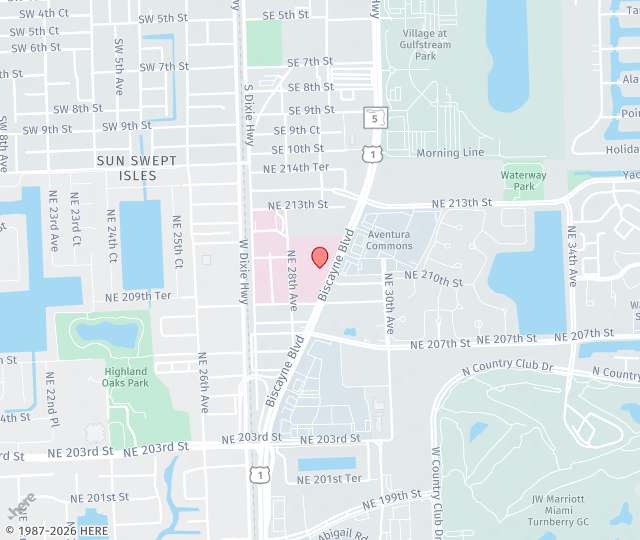
Schedule your consultation with Dr. Baotram Tran in Aventura to explore your breast augmentation options.
REQUEST A CONSULTATION
Please use this form for general information purposes only. DO NOT send personal health information through this form. Specific patient care must be addressed during your appointment.
Please complete the following form to request an appointment. Please also note that availability will vary depending on your request. Your appointment will be confirmed by phone by a member of our staff. Thank you!