Restore Nipple Projection with an Individualized Surgical Approach
An inverted nipple turns inward rather than projecting outward from the breast.
For many patients, nipple inversion has been present since breast development and represents a benign anatomical variation.
Some patients are bothered primarily by appearance. Others may experience difficulty with hygiene, irritation, intimacy, or breastfeeding.
Inverted nipple correction is a surgical procedure designed to release the tissues pulling the nipple inward and create a more stable outward projection.
The procedure must be individualized because nipple inversion varies considerably in severity.
Some nipples can be easily brought outward and remain projected temporarily. Others retract immediately. More severe inversion may be firmly tethered beneath the nipple.
Dr. Baotram Tran evaluates the degree of inversion, breast anatomy, nipple symmetry, prior breast surgery, and future breastfeeding goals before recommending treatment.
The goal is not simply to pull the nipple outward. It is to release the structures causing the inversion while creating a natural and durable nipple shape.
What Is an Inverted Nipple?
An inverted nipple is a nipple that lies flat, retracts inward, or remains below the surrounding areola rather than projecting outward.
Nipple inversion may affect:
- One nipple
- Both nipples
- The entire nipple
- Only part of the nipple
The condition may be present from adolescence or may develop later in life.
Congenital or longstanding nipple inversion is often related to shortened or tethered structures beneath the nipple.
These may include:
- Fibrous tissue
- Connective-tissue bands
- Shortened milk ducts
- Limited supporting tissue beneath the nipple
The severity of these anatomical differences determines how easily the nipple can be corrected.
Congenital vs. Acquired Nipple Inversion
Longstanding Inverted Nipples
Many inverted nipples have been present since breast development.
Longstanding, stable inversion affecting one or both breasts is often a benign anatomical variation.
Patients may seek treatment because of:
- Cosmetic concerns
- Difficulty cleaning the nipple
- Irritation
- Difficulty with nipple stimulation
- Breastfeeding concerns
Newly Inverted Nipple
A nipple that was previously normal and becomes newly inverted should be evaluated before cosmetic correction.
New nipple retraction may occasionally be associated with:
- Scar tissue
- Previous breast surgery
- Infection or inflammation
- Changes within the milk ducts
- An underlying breast mass
- Breast cancer
A newly inverted nipple does not automatically mean cancer is present.
However, unexplained new nipple inversion—particularly when it occurs on one side—should not simply be treated as a cosmetic problem.
Appropriate breast evaluation or imaging may be recommended before surgery.
How Severe Is My Nipple Inversion?
Nipple inversion is commonly described using three grades.
The grade helps describe how easily the nipple can be brought outward and how strongly the underlying tissues pull it inward.
Grade I Inverted Nipple
A Grade I nipple can usually be brought outward easily and may remain projected for some time.
The underlying tethering is generally relatively mild.
Patients may notice that the nipple intermittently projects with:
- Cold
- Stimulation
- Manual pressure
and then retracts again.
More conservative correction may be possible in selected Grade I nipples.
Grade II Inverted Nipple
A Grade II nipple can be pulled outward but does not maintain projection reliably.
It tends to retract again after pressure is released.
There is generally more significant tethering beneath the nipple.
Grade II inversion commonly requires surgical release of the restrictive tissue to create more stable projection.
Grade III Inverted Nipple
A Grade III nipple is more severely inverted and may be difficult or impossible to bring outward manually.
The nipple may be tightly tethered beneath the areola.
More extensive tissue release may be necessary.
In severe cases, preserving every lactiferous duct may not be technically possible while achieving reliable correction.
The appropriate technique should therefore be individualized according to both the anatomy and the patient's breastfeeding goals.
What Causes an Inverted Nipple?
Inverted nipples are commonly caused by tissue tethering beneath the nipple.
Potential contributing factors include:
- Shortened milk ducts
- Fibrous bands
- Limited soft-tissue support
- Congenital nipple anatomy
- Scar tissue after previous surgery
- Previous breast infection
- Breast inflammation
- Trauma
- Changes within the breast
The underlying cause influences how the nipple should be treated.
Who Is a Good Candidate for Inverted Nipple Correction?
You may be a candidate if you have:
- Longstanding nipple inversion
- One or both inverted nipples
- Difficulty maintaining nipple projection
- Cosmetic concerns about nipple appearance
- Irritation or hygiene concerns
- Significant asymmetry between the nipples
- Realistic expectations regarding recurrence and scarring
Patients should also be in appropriate health for elective surgery and avoid nicotine.
If nipple inversion developed recently or has changed from its usual appearance, additional breast evaluation may be necessary before elective correction.
Do All Inverted Nipples Need Surgery?
No.
Nipple inversion is often harmless and does not require treatment unless it causes a functional or aesthetic concern.
Mild inversion may sometimes respond temporarily to:
- Manual stimulation
- Suction devices
- Nipple shields
- Other non-surgical methods
These methods may be particularly relevant for women whose primary concern is breastfeeding.
However, results may be temporary and more significant inversion often requires surgery for a durable anatomical correction.
Can Inverted Nipple Correction Preserve the Milk Ducts?
Breastfeeding Goals Should Be Discussed Before Surgery
There are many techniques for correcting nipple inversion.
Some are designed to preserve the lactiferous ducts whenever possible.
Others may require division of shortened ducts or fibrous structures when the nipple is severely tethered.
Published systematic reviews have not demonstrated that routinely dividing the ducts provides superior correction, and duct-preserving approaches are generally preferred when feasible. (PubMed)
For this reason, Dr. Tran considers:
- Severity of inversion
- Amount of tethering
- Whether the nipple can be manually projected
- Previous breast surgery
- Future breastfeeding goals
Preserving breastfeeding potential is considered whenever the anatomy allows it.
Can I Breastfeed After Inverted Nipple Correction?
Possibly.
Future breastfeeding depends on:
- The severity of the inversion
- The underlying breast anatomy
- Whether milk ducts must be divided
- The surgical technique
- Individual milk production
- Other factors unrelated to nipple surgery
Some duct-preserving techniques are specifically designed to maintain breastfeeding potential. Published literature supports considering duct-preserving approaches when possible, although breastfeeding outcomes are not consistently reported across studies. (PubMed)
However, future breastfeeding cannot be guaranteed, even when the ducts are preserved.
Patients who strongly wish to breastfeed in the future should discuss this before choosing surgery.
Should I Wait Until After Pregnancy?
Not necessarily.
The decision depends on how important future breastfeeding is to you and the severity of the nipple inversion.
If breastfeeding is a major priority and the inversion is mild, delaying surgery may be reasonable.
If the inversion is causing significant functional or aesthetic concerns, correction may still be considered before pregnancy using a technique designed to preserve ductal structures when appropriate.
There is no single correct timing for every patient.
Inverted Nipple Correction and Breastfeeding Difficulty
An inverted nipple can make breastfeeding more difficult because the infant may have greater difficulty latching.
However, an inverted nipple does not automatically mean breastfeeding will be impossible.
Some women can breastfeed successfully with:
- Lactation support
- Positioning techniques
- Nipple shields
- Suction devices
- Other conservative interventions
A 2024 systematic review found that several non-surgical interventions can improve breastfeeding success in women with flat or inverted nipples. (PubMed)
Surgery should therefore not automatically be considered the first treatment when the only concern is breastfeeding.
How Is Inverted Nipple Correction Performed?
Inverted nipple correction is commonly performed as an outpatient procedure and may often be performed in the office under local anesthesia when appropriate.
Small incisions are placed at or near the nipple.
Through these incisions, the tissues responsible for pulling the nipple inward are carefully released.
Depending on the anatomy, surgery may involve:
- Release of fibrous bands
- Release of shortened tissues
- Preservation of milk ducts when possible
- Selective division of restrictive ducts in severe cases
- Internal sutures to maintain projection
- Local tissue rearrangement when additional support is needed
The exact technique depends on the grade of inversion.
There is no single operation that is ideal for every inverted nipple.
How Is the Nipple Kept Projected After Surgery?
Once the restrictive tissues have been released, the nipple needs time to heal in its new position.
Depending on the surgical technique, support may include:
- Internal sutures
- External protective dressings
- A nipple shield or protective device
- Other temporary support
The purpose is to reduce inward pressure while scar tissue develops in the corrected position.
Postoperative support instructions vary according to the procedure performed.
Will Inverted Nipple Correction Leave a Scar?
Yes.
All surgical incisions create scars.
Incisions used for inverted nipple correction are generally small and positioned within or immediately adjacent to the nipple-areola complex.
Early scars may appear:
- Pink
- Red
- Firm
- More noticeable than expected
They generally soften and become less noticeable as healing progresses.
Final scar appearance depends on:
- Genetics
- Skin type
- Healing
- Incision placement
- Scar biology
- Postoperative care
Will Nipple Sensation Change?
Temporary changes in nipple sensation can occur after surgery.
The nipple may feel:
- Numb
- More sensitive
- Less sensitive
- Different from the opposite side
Sensation often improves during healing.
However, permanent changes in nipple sensation are possible.
The risk may vary according to the severity of inversion and the amount of tissue release required.
Can Both Nipples Be Corrected at the Same Time?
Yes.
Bilateral nipple inversion can usually be treated during the same procedure.
The degree of inversion may differ between the two sides, so each nipple may require a slightly different correction.
The goal is improved symmetry while maintaining a natural appearance.
Can Only One Inverted Nipple Be Corrected?
Yes.
Unilateral correction may be performed when only one nipple is inverted.
The opposite nipple provides a useful reference for:
- Projection
- Nipple size
- Shape
- Symmetry
However, natural nipple differences may remain after surgery.
Can Inverted Nipple Correction Be Combined with Breast Augmentation?
Yes, when appropriate.
Patients considering Breast Augmentation may also have longstanding nipple inversion.
The implant and nipple correction address different concerns.
Breast augmentation changes breast volume and shape.
Inverted nipple correction changes nipple projection.
The procedures may be coordinated during the same overall surgical plan when appropriate.
Can Inverted Nipple Correction Be Combined with a Breast Lift?
Yes.
A Breast Lift can reposition and reshape sagging breasts while inverted nipple correction addresses nipple projection.
This combination may be useful when pregnancy, aging, or weight changes have affected both breast position and nipple appearance.
Can Inverted Nipple Correction Be Combined with Breast Reduction?
Yes.
Patients undergoing Breast Reduction may also have inverted nipples.
The reduction reshapes and decreases the size of the breast while the nipple inversion can be addressed when appropriate.
The treatment plan depends on the severity of inversion, nipple blood supply, and the overall breast-reduction technique.
Can Inverted Nipple Correction Be Combined with Breast Revision Surgery?
Yes.
Previous breast surgery may change nipple or breast anatomy.
Patients undergoing Breast Revision Surgery may have nipple inversion related to:
- Pre-existing anatomy
- Scar tissue
- Previous surgery
- Changes in breast shape
The underlying cause should be identified before correction.
What If My Nipple Became Inverted After Breast Surgery?
A nipple that becomes retracted after breast surgery should be evaluated before cosmetic correction.
Possible causes include:
- Scar tissue
- Changes in breast shape
- Tissue tethering
- Previous infection
- Fat necrosis
- Other postoperative changes
The treatment depends on the underlying cause.
Simply releasing the nipple without understanding why it became inverted may not provide the best result.
Can Inverted Nipples Come Back After Surgery?
Yes.
Recurrence is possible.
Published surgical reviews report generally high rates of successful correction but also acknowledge recurrence across different techniques. A large literature review of more than 3,000 corrected nipples reported an overall recurrence rate of approximately 4%, although techniques and study quality varied considerably. (PubMed)
The likelihood of recurrence may depend on:
- Severity of inversion
- Degree of underlying fibrosis
- Surgical technique
- Healing
- Previous surgery
- Individual anatomy
More severe inversion may carry a greater risk of recurrence.
Your Inverted Nipple Consultation
During your consultation, Dr. Baotram Tran will evaluate:
- Whether one or both nipples are inverted
- How long the inversion has been present
- Whether the nipple was previously normal
- Degree of nipple projection
- Severity of tethering
- Nipple and areola size
- Breast symmetry
- Previous breast surgery
- Previous breast infection
- Pregnancy history
- Breastfeeding goals
- Breast imaging history
- Any recent changes in the breast or nipple
Your treatment plan may include:
- Observation
- Non-surgical management
- Duct-preserving surgical correction
- More extensive surgical release
- Correction combined with another breast procedure
- Additional breast evaluation before cosmetic treatment when indicated
The first step is determining whether the nipple inversion is a longstanding anatomical variation or a new breast change that requires further evaluation.
The Inverted Nipple Correction Procedure
Inverted nipple correction is typically performed as an outpatient procedure.
For an isolated correction, local anesthesia is often sufficient.
Small incisions are placed around or within the nipple.
The underlying restrictive tissues are carefully released until the nipple can maintain outward projection.
Depending on the anatomy, internal sutures or local tissue support may be used to reduce the risk of reinversion.
Milk ducts are preserved when feasible and appropriate for the patient's anatomy and breastfeeding goals.
The incisions are then carefully closed and the nipple may be protected with a specialized dressing during early healing.
Recovery After Inverted Nipple Correction
The First Few Days
Patients may experience:
- Mild swelling
- Bruising
- Tenderness
- Temporary nipple numbness or sensitivity
- Small amounts of drainage around the incision
A protective dressing may be used to avoid pressure on the nipple.
One to Two Weeks
Swelling and tenderness generally improve.
If removable sutures are used, they may be removed during an early postoperative visit according to the technique performed.
Direct pressure, friction, or trauma to the nipple should be avoided.
Several Weeks
The nipple continues to heal in its new position.
A protective dressing or nipple shield may be recommended for a period of time depending on the correction.
Several Months
Scars continue to soften and nipple sensation may continue to improve.
The final projection becomes easier to evaluate as healing progresses.
How Long Do the Results Last?
Inverted nipple correction is intended to provide long-lasting improvement.
However, recurrence can occur.
Long-term stability depends on:
- Severity of inversion
- Tissue characteristics
- Surgical technique
- Healing
- Pregnancy and breastfeeding
- Scar formation
- Previous breast surgery
No technique can guarantee that the nipple will never retract again.
Investment
Every inverted nipple correction is individualized according to the number of nipples treated and the severity of inversion.
| Procedure | Estimated Investment |
|---|---|
| Inverted Nipple Correction — One Side | Starting at $2,000 |
| Inverted Nipple Correction — Both Sides | Starting at $3,500 |
| Revision Inverted Nipple Correction | Custom Quote |
| Inverted Nipple Correction with Additional Breast Surgery | Custom Quote |
The final cost depends on surgical complexity, anesthesia, and whether additional procedures are performed.
A personalized treatment plan and detailed fee quote will be provided following your consultation.
Inverted Nipple Correction Myths and Misconceptions
Myth: Every Inverted Nipple Is Abnormal
No.
Many inverted nipples are congenital or longstanding benign anatomical variations.
Myth: A Newly Inverted Nipple Is Always Cancer
No.
There are several benign causes of nipple inversion.
However, a newly inverted nipple—particularly unilateral inversion—should be evaluated rather than assumed to be cosmetic.
Myth: Every Inverted Nipple Needs Surgery
No.
Treatment is elective unless the inversion is associated with another medical condition.
Some mild cases may be managed conservatively.
Myth: Surgery Always Requires Cutting the Milk Ducts
No.
Duct-preserving correction is possible in many patients, particularly with mild to moderate inversion.
More severe inversion may require more extensive release.
Myth: Breastfeeding Is Always Impossible After Inverted Nipple Correction
No.
Some techniques preserve the lactiferous ducts and are specifically designed to maintain breastfeeding potential.
However, breastfeeding cannot be guaranteed after surgery.
Myth: Surgery Guarantees That the Nipple Will Never Invert Again
No.
Recurrence can occur, particularly in more severe cases.
Myth: Inverted Nipple Correction Requires General Anesthesia
Not necessarily.
Isolated nipple correction can often be performed under local anesthesia.
Myth: Inverted Nipple Correction Leaves No Scar
No.
Small scars are created around or within the nipple-areola complex.
They generally become less noticeable with healing.
Myth: Both Nipples Must Be Treated Even If Only One Is Inverted
No.
Unilateral correction can be performed when only one nipple is affected.
Frequently Asked Questions About Inverted Nipple Correction
What Is an Inverted Nipple?
An inverted nipple retracts inward rather than projecting outward from the breast.
It may affect one or both nipples and may range from mild to severe.
Why Is My Nipple Inverted?
Longstanding inversion is commonly related to shortened ducts, fibrous tissue, or tethering beneath the nipple.
New inversion may have other causes and should be evaluated.
Is an Inverted Nipple Dangerous?
Longstanding nipple inversion is often benign.
A nipple that becomes newly inverted or changes significantly should be evaluated to rule out an underlying breast condition.
Can One Nipple Be Inverted and the Other Normal?
Yes.
Nipple inversion can be unilateral or bilateral.
What Are the Grades of Inverted Nipples?
Grade I nipples can be easily pulled outward and remain projected.
Grade II nipples can be pulled outward but tend to retract.
Grade III nipples are tightly inverted and difficult to project manually.
Can Mild Nipple Inversion Correct Itself?
Some mild nipples intermittently project with stimulation or suction.
However, longstanding anatomical inversion may continue without surgical correction.
Can Inverted Nipple Correction Be Done Under Local Anesthesia?
Yes.
Many isolated inverted nipple procedures can be performed in the office under local anesthesia.
How Long Does the Procedure Take?
Procedure time depends on whether one or both nipples are treated and the severity of inversion.
Will My Milk Ducts Be Cut?
Not necessarily.
Duct-preserving approaches are preferred when feasible, particularly when future breastfeeding is important.
Severe inversion may require more extensive tissue release.
Can I Breastfeed After Surgery?
Possibly.
Breastfeeding potential depends on the technique, severity of inversion, underlying breast anatomy, and individual milk production.
It cannot be guaranteed.
Should I Wait Until After Having Children?
Not necessarily.
The decision depends on your breastfeeding goals, severity of inversion, and how much the condition bothers you.
Can Surgery Improve Breastfeeding?
Correcting nipple projection may improve latch mechanics in some patients, but surgery does not guarantee breastfeeding success.
Women whose only concern is breastfeeding may benefit from lactation support or non-surgical interventions before considering surgery.
Will I Lose Nipple Sensation?
Temporary changes in sensation can occur.
Permanent sensory changes are possible but not inevitable.
Will I Have a Scar?
Yes.
The scars are generally small and positioned within or near the nipple-areola complex.
Can the Nipple Become Inverted Again?
Yes.
Recurrence is possible.
The risk depends partly on the severity of inversion and surgical technique.
Can Both Nipples Be Corrected Together?
Yes.
Bilateral correction can usually be performed during the same procedure.
Can Inverted Nipple Correction Be Done with Breast Augmentation?
Yes.
Breast Augmentation can be combined with nipple correction when appropriate.
Can It Be Done with a Breast Lift?
Yes.
Breast Lift and nipple correction may be performed together when both breast position and nipple projection need treatment.
Can It Be Done with Breast Reduction?
Yes.
Breast Reduction may be combined with nipple correction when appropriate.
What Are the Risks of Inverted Nipple Correction?
Potential risks include:
- Bleeding
- Hematoma
- Infection
- Delayed healing
- Unfavorable scarring
- Nipple asymmetry
- Under-correction
- Over-projection
- Recurrent nipple inversion
- Changes in nipple sensation
- Partial or complete loss of sensation
- Difficulty breastfeeding
- Injury to lactiferous ducts
- Changes in nipple shape
- Tissue loss
- Need for revision surgery
Individual risks vary according to the degree of inversion and the technique required.
Why Choose Dr. Baotram Tran?
Inverted Nipple Correction Requires Balancing Projection, Function, and Anatomy
Although inverted nipple correction is a relatively small procedure, successful treatment requires more than simply pulling the nipple outward.
The surgeon must consider the structures causing the inversion, the severity of tethering, nipple blood supply, sensation, breastfeeding goals, and the likelihood of recurrence.
As a double board-certified plastic surgeon, Dr. Baotram Tran approaches inverted nipple correction with attention to:
- Degree of nipple inversion
- Congenital versus acquired inversion
- Nipple and areola anatomy
- Breast symmetry
- Duct preservation when appropriate
- Future breastfeeding goals
- Nipple sensation
- Natural nipple projection
- Scar placement
- Prevention of excessive tension
- Recurrence risk
- Previous breast surgery
- Recognition of when newly acquired nipple inversion requires additional breast evaluation
- Integration with other breast procedures when appropriate
The goal is not simply to make the nipple project. It is to create stable, natural projection while preserving function whenever the anatomy allows.
Schedule Your Consultation
If you have one or both nipples that have been inverted since breast development, or if nipple inversion causes cosmetic, hygiene, intimacy, or functional concerns, surgical correction may be an option.
During your consultation, Dr. Baotram Tran will evaluate the severity of inversion, breast and nipple anatomy, symmetry, previous surgery, breastfeeding goals, and whether any additional breast evaluation is necessary.
Your individualized treatment plan may include:
- Unilateral Inverted Nipple Correction
- Bilateral Inverted Nipple Correction
- Duct-Preserving Correction When Appropriate
- Revision Inverted Nipple Correction
- Breast Augmentation
- Breast Lift
- Breast Reduction
- Breast Revision Surgery
- Or another individualized breast procedure
The appropriate treatment depends on the severity of the inversion, your anatomy, and your future goals.
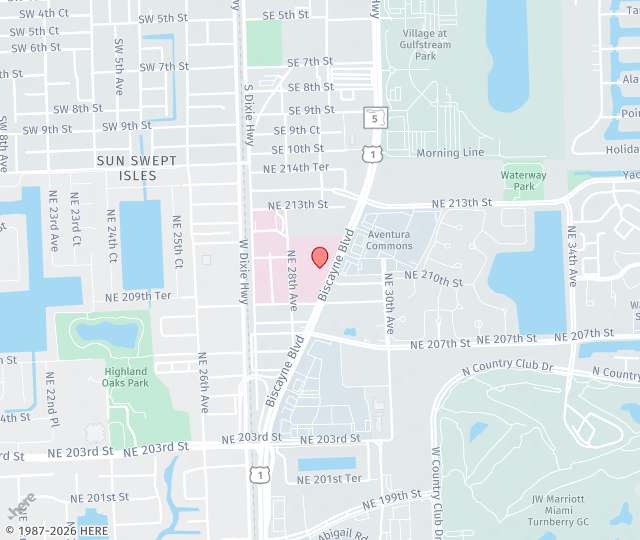
Schedule your consultation with Dr. Baotram Tran in Aventura to discuss inverted nipple correction.
REQUEST A CONSULTATION
Please use this form for general information purposes only. DO NOT send personal health information through this form. Specific patient care must be addressed during your appointment.
Please complete the following form to request an appointment. Please also note that availability will vary depending on your request. Your appointment will be confirmed by phone by a member of our staff. Thank you!